
Sargassum in Guadeloupe: Everything You Need to Know to Make the Most of Your Stay
Sargassum seaweed regularly makes headlines when it washes up on certain beaches in the Caribbean. However, its presence shouldn’t deter you from traveling to Guadeloupe.
With a little practical information and some good planning, it’s entirely possible to enjoy magnificent beaches, exceptional scenery, and all the treasures the archipelago has to offer.
Find out what Sargassum actually is, where it’s found, how to adjust your itinerary, and why a rental car is still the best way to explore Guadeloupe at your own pace.
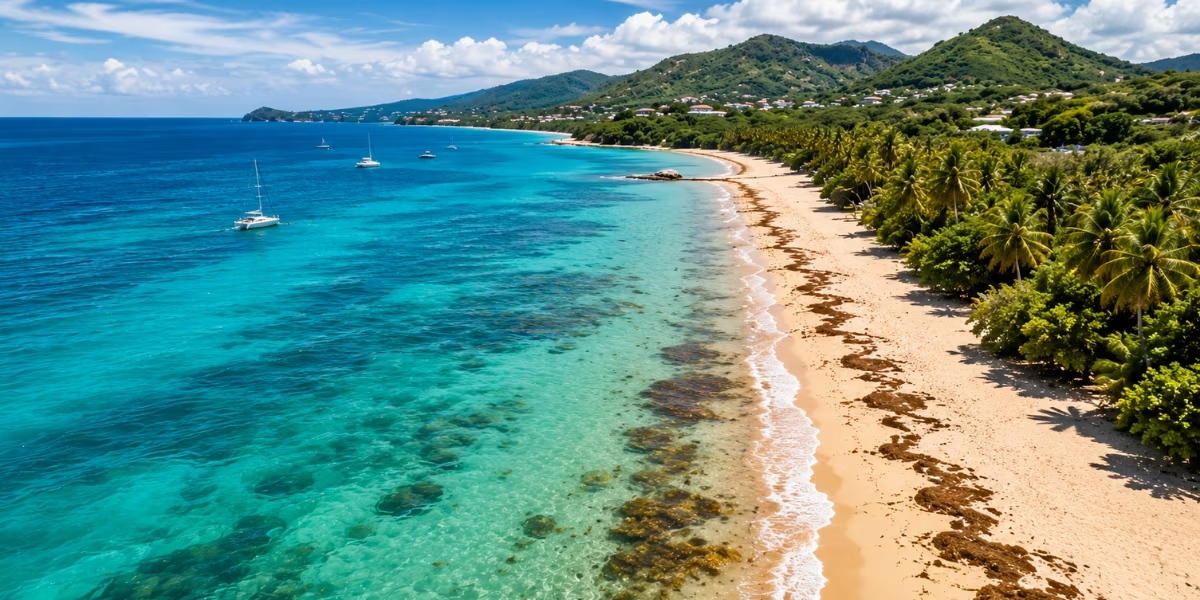
What is Sargassum?
Sargassum is a type of floating brown algae that occurs naturally in the Atlantic Ocean. In recent years, its abundance has increased significantly, leading to more frequent strandings along certain Caribbean coasts.
Once washed ashore, it can emit an unpleasant odor as it decomposes. This phenomenon is mainly localized and does not affect all of Guadeloupe.
Contrary to popular belief, the Sargassum does not make the island inaccessible or all the beaches unusable.
Why is there more talk about Sargassum today?
Scientists have observed a significant increase in Sargassum blooms since the 2010s. Several factors could contribute to this trend, including:
warmer waters
changes in ocean currents
nutrient inputs from major rivers such as the Amazon
climate change
Research is ongoing to better understand this natural phenomenon, which has become a recurring occurrence.
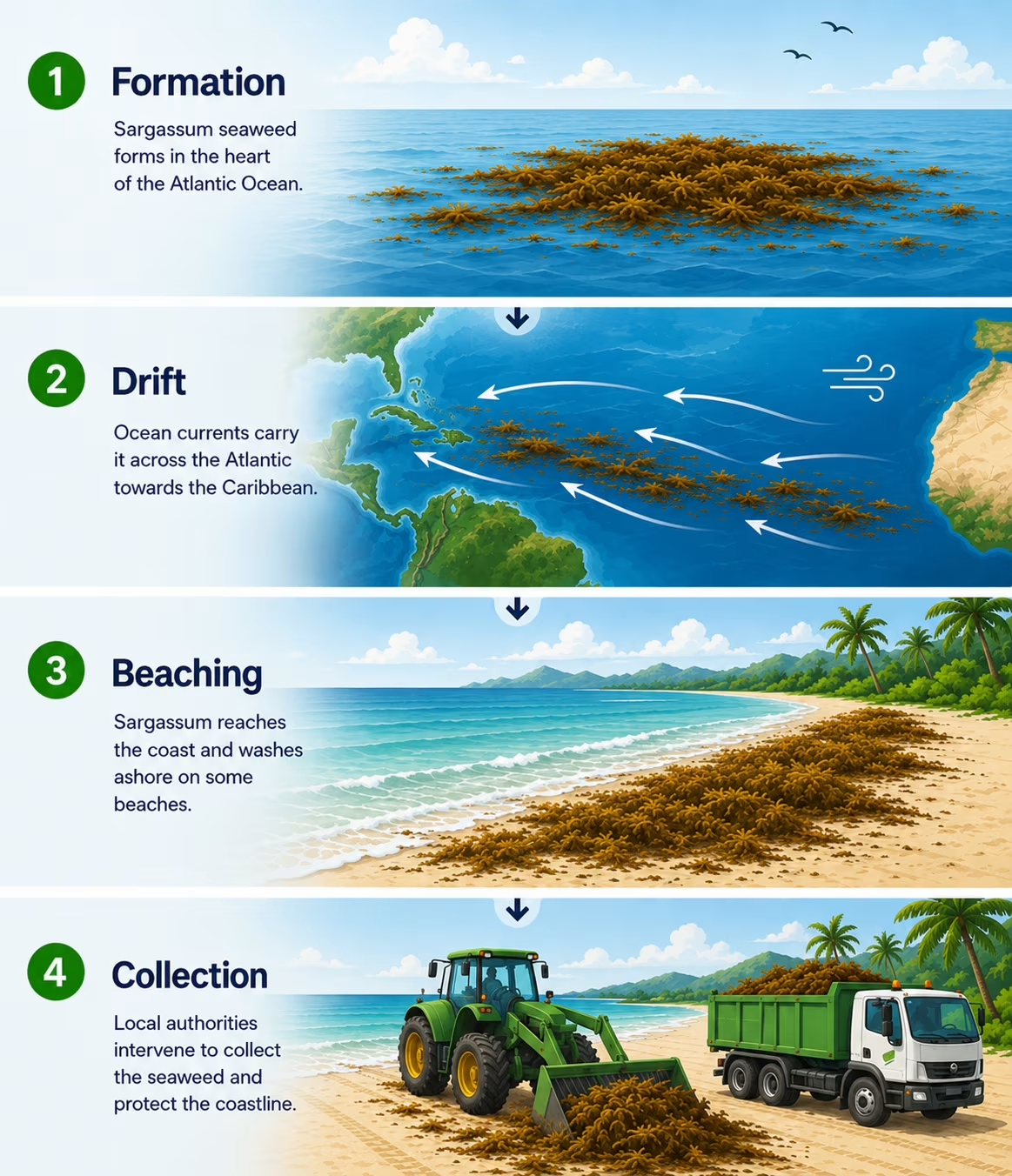
Where is sargassum found in Guadeloupe?
Sargassum strandings vary depending on the season, winds, and ocean currents. It is therefore impossible to predict with certainty which beaches will be affected several weeks in advance.
As a general rule, the coasts facing the Atlantic Ocean are most exposed to Sargassum drifts, while the Caribbean coasts, on the western side of the archipelago, are generally less affected.
This map highlights the areas that have historically been the most exposed and is provided for guidance only. Before your trip, we recommend consulting the latest official monitoring bulletins.
Will Sargassum Ruin Your Vacation?
In most cases, no. Guadeloupe offers a wide variety of beaches, so if one is temporarily affected by sargassum, you can often find another just a few kilometres away. The archipelago is also home to numerous islets, rivers, waterfalls and natural sites waiting to be explored or rediscovered.
One of the main advantages of having a rental car is the freedom to adapt your itinerary at any time and explore the entire archipelago according to current conditions.
Our Tips for Making the Most of Your Stay
Although sargassum is a localized and temporary phenomenon, it is part of Guadeloupe's natural environment. However, it should not discourage you from visiting. With a little planning and a few practical tips, you can make the most of your stay in Guadeloupe.
📍 Check the latest conditions: Before you set off, consult the official monitoring bulletins or our sargassum map to see the latest conditions.
🏖️ Stay flexible when choosing your beach: If one beach is affected, simply head to another area. Many beaches remain accessible throughout the year.
🌿 Enjoy more than just the beaches: Discorver waterfalls, tropical rainforest, local markets, charming villages and nearby islands. Guadeloupe has so much more to offer.
🚗 Explore the island with complete freedom: As conditions can vary from one area to another, having a rental car allows you to adapt your itinerary with ease. You'll be free to discover the island's most beautiful places based on current conditions and enjoy your holiday with complete peace of mind.
Sargassum: An Environmental Challenge… and a Resource for the Future
While sargassum poses a significant environmental challenge for the regions affected, it also opens the door to new opportunities. Around the world, researchers, businesses and entrepreneurs are developing innovative ways to give it a second life, including:
🧱 Construction materials and eco-friendly bricks
🌱 Compost and agricultural soil amendments
♻️ Bio-based packaging
📄 Paper and biomaterials
⚡ Biofuels and energy recovery
🧴 Everyday products and innovative materials
In Guadeloupe, several research and innovation projects are also underway to develop solutions tailored to the territory. Initiatives supported by the Regional Council of Guadeloupe, ADEME and the Université des Antilles , together with scientific partners, are exploring the production of eco-materials for construction, the extraction of valuable compounds, the development of agricultural fertilisers and other methods of sargassum valorisation.
These initiatives reflect a shared ambition: to transform an environmental challenge into a sustainable resource, supporting the circular economy and fostering innovation across the Caribbean.
Frequently Asked Questions About Sargassum
📅 When is sargassum season in Guadeloupe?
Sargassum landings are generally more frequent between spring and autumn, but they vary from year to year depending on winds, ocean currents and weather conditions.
🏖️ Which beaches are free of sargassum?
Beaches on the Caribbean coast, such as Grande Anse in Deshaies, Malendure in Bouillante or Grande Anse in Trois-Rivières, are generally less exposed than beaches facing the Atlantic Ocean, although no beach can be guaranteed completely sargassum-free.
🌊 Can you safely swim when sargassum is present?
Yes, as long as the beach is not affected by significant sargassum landings and there are no official recommendations to avoid the area.
🗺️ Where can you check sargassum forecasts?
Check the bulletins published by Météo-France Antilles-Guyane or DEAL Guadeloupe.
✈️ Should you cancel your trip because of sargassum?
No, Guadeloupe offers a wide variety of beaches and activities, allowing you to enjoy your stay by simply adapting your plans if needed.

Don’t miss our latest offers!
Receive our promotions, special offers, and car rental tips for Guadeloupe directly by email.


